The Role of People, Process, and Technology in Data Governance
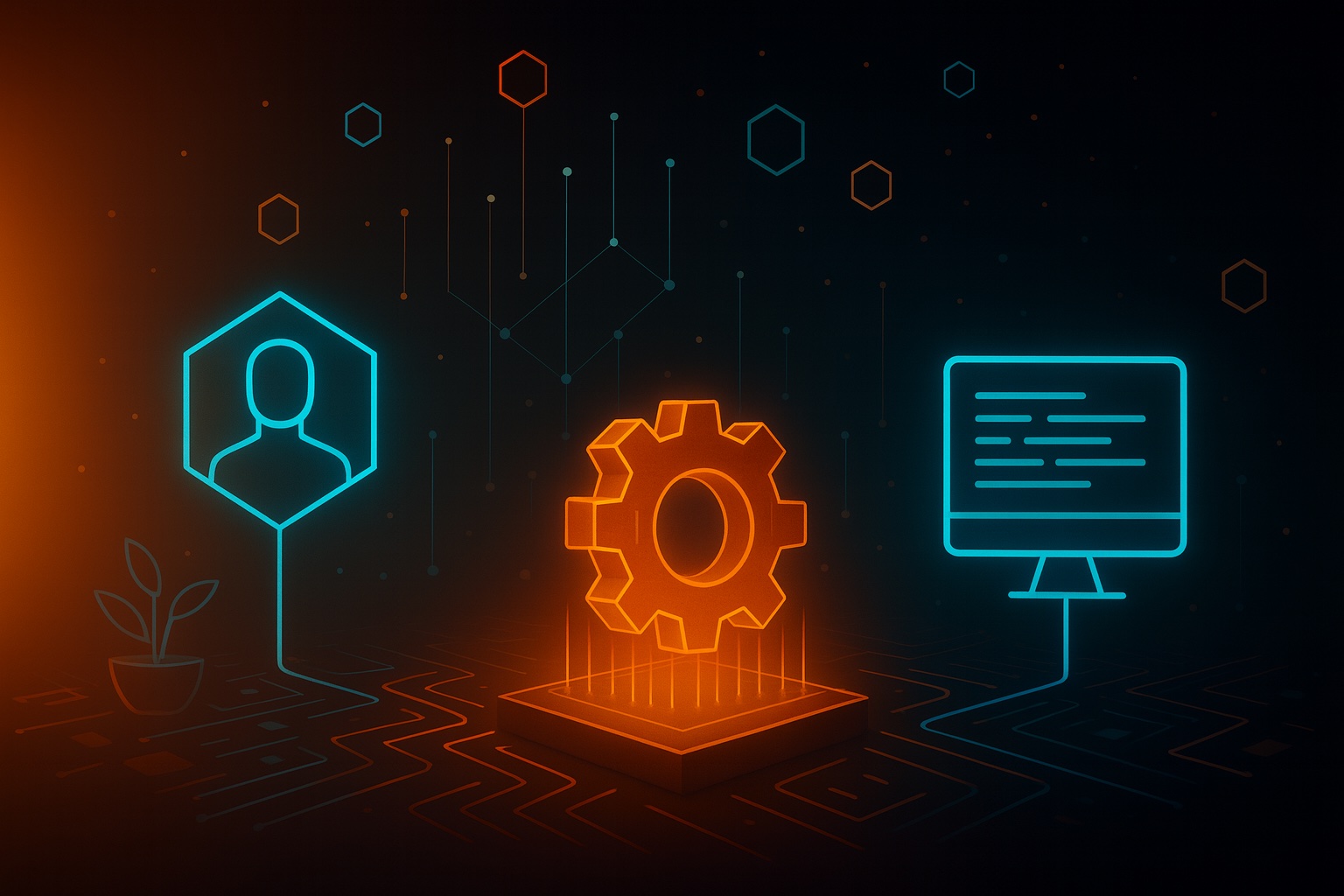
Many organizations believe that buying a data governance tool is the same as implementing governance. The reality is different. Tools can support governance, but they can’t define policies, create accountability, or change culture.
True governance depends on the right balance of people, process, and technology. Among these, process plays the most critical role. It bridges people and tools, ensuring governance is not just a set of intentions, but a working system.
This article explores how people, process, and technology fit together in the data governance process—and why process is the key to making governance successful.
Contact Data Ideology to Learn More
What Is the Data Governance Process?
A data governance process is the set of workflows, policies, and decision-making rules that determine how data is managed across its lifecycle. It ensures that data is:
- Accurate
- Secure
- Consistent
- Compliant with regulations
Think of the process as the operating system of governance. While a governance framework defines the structure (roles, committees, policies), the process makes it actionable by showing how those roles interact and how policies are applied in daily work.
Without a process, governance fails to scale beyond theory.
🔎 Learn more about our Data Governance Solutions
The People in Data Governance
People are the foundation of governance. They bring accountability, decision-making, and context.
Key Roles Include:
- Executives: Provide sponsorship and set business priorities.
- Data Owners: Have ultimate accountability for data within their domain.
- Data Stewards: Enforce data quality and policies on a day-to-day basis.
- Custodians (IT/Operations): Ensure technical implementation and security.
- End Users: Consume data and must follow policies.
Why People Matter:
- They define what “good data” means.
- They resolve conflicts over metrics and definitions.
- They ensure governance aligns with business objectives.
Common Challenge:
Without clear role definitions, governance becomes confused and inconsistent. Business leaders assume IT owns everything, while IT assumes governance is a business problem.
The Technology in Data Governance
Technology supports governance by making processes scalable and repeatable. Common tools include:
- Data Catalogs: Provide a searchable inventory of data assets.
- Data Lineage Tools: Show how data moves through systems.
- Quality Monitoring Systems: Track accuracy, completeness, and timeliness.
- Policy Automation Platforms: Enforce access rules and compliance.
Benefits:
- Improves efficiency by automating manual checks.
- Provides visibility into data sources and usage.
- Helps enforce governance policies consistently.
Limitations:
- Tools cannot define accountability.
- Technology cannot resolve conflicts over business rules.
- Without people and processes, tools become underutilized.
Related read: Data Governance vs. Data Security vs. Data Quality
Why Process Is the Bridge
Process is what turns governance from theory into practice. It connects people with technology, ensuring each knows what to do and how to do it.
Process Defines:
- Workflows: Who reviews data quality issues and how they are escalated.
- Decision Rights: Who approves changes to definitions or policies.
- Technology Use: How tools support governance, instead of dictating it.
Without Process:
- People lack structure and default to silos.
- Tools become shelfware, purchased but not adopted.
- Compliance risks grow because no one knows who is accountable.
Process ensures governance is not just top-down policy or bottom-up technology, but a coordinated effort that delivers measurable results.
Real-World Example
A U.S. steel manufacturer invested heavily in governance technology but struggled with adoption. Business leaders and IT pointed fingers, and policies existed only on paper.
By defining governance processes—ownership, stewardship roles, escalation paths, and workflows—Data Ideology helped them align people and tools. The result:
- Clear accountability for compliance
- Improved trust in reporting
- Effective use of governance technology
See the full story:Transforming Data Governance to Reduce Compliance Risks and Drive Value
How to Balance People, Process, and Technology in Governance
A successful governance program balances all three pillars. Here’s how organizations can achieve it:
- Start with People
- Define roles and responsibilities.
- Create accountability for data ownership and stewardship.
- Design Processes
- Document workflows for issue resolution, approvals, and compliance.
- Establish governance committees and escalation paths.
- Select Supporting Technology
- Choose tools that align with workflows, not the other way around.
- Automate enforcement where possible.
Tip: Start small. Pilot governance processes in a few data domains before scaling across the enterprise.
Common Mistakes in Balancing People, Process, and Technology
Even strong governance initiatives can fail if the model is poorly designed. Here are the Top 7 Mistakes organizations make:
- Buying tools before defining processes → Leads to shelfware.
- Overcomplicating committees → Slows decisions, frustrates users.
- Ignoring business stakeholders → Results in poor adoption.
- Forcing the wrong governance model → Culture clashes undermine trust.
- Leaving roles undefined → No one knows who is accountable.
- Focusing only on compliance → Misses opportunities to improve analytics and AI.
- Failing to evolve over time → Policies and processes quickly become outdated.
Related resource: Data Governance vs. Data Security vs. Data Quality
Future Outlook: How Data Governance Is Evolving
The governance landscape is shifting quickly as organizations adopt AI, cloud, and SaaS ecosystems.
AI Governance Challenges
- Bias: Who is accountable for ensuring fair training data?
- Lineage: Can organizations trace where AI inputs originated?
- Explainability: How do you prove AI decisions are transparent and ethical?
Governance models must expand to address these new risks.
Multi-Cloud and SaaS Governance
Modern organizations rely on multiple cloud providers and hundreds of SaaS tools. Governance processes must:
- Define ownership across distributed systems
- Standardize policies enterprise-wide
- Integrate with catalogs, lineage tools, and compliance monitors
The Next Generation of Governance
Future governance models will be adaptive:
- Flexible enough to support rapid digital transformation
- Strong enough to meet regulatory demands
- Designed for hybrid, multi-cloud, and AI-driven ecosystems
Conclusion
People, process, and technology are the three pillars of governance. Tools and policies alone aren’t enough—process is the bridge that ensures governance is more than theory.
Organizations that invest in balanced governance see stronger compliance, improved data quality, and better readiness for AI and analytics.
If your governance program feels stuck, it may be time to revisit how your people, processes, and technology align.